
Serverless Architecture in SaaS: Benefits & Limitations
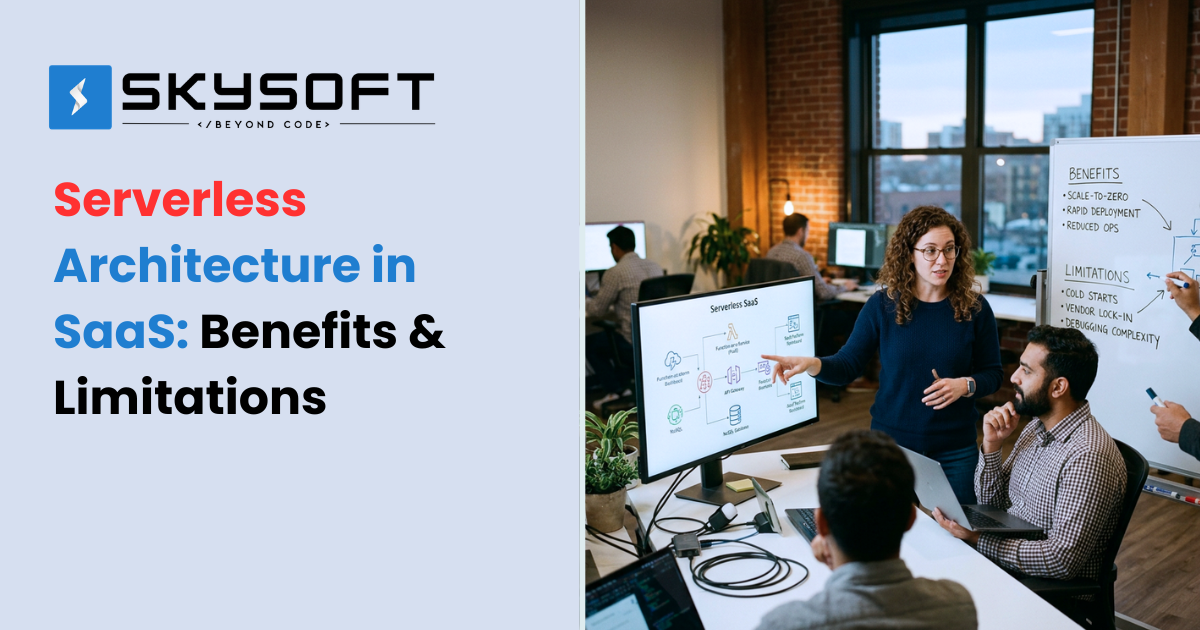
Serverless architecture is changing how SaaS applications are built and scaled. Despite the name, servers still exist, but businesses no longer manage them directly. Instead, cloud providers handle infrastructure, allowing developers to focus only on code and functionality.
What is Serverless Architecture?
Serverless architecture is a cloud computing model where applications run on demand. Resources are automatically allocated based on usage, and businesses are charged only for what they consume. It is commonly used for APIs, microservices, event-driven systems, and backend processes.
Benefits of Serverless in SaaS
1. Cost Efficiency
With serverless, you pay only for execution time instead of maintaining idle servers. This is ideal for SaaS platforms with variable workloads.
2. Automatic Scalability
Serverless systems automatically scale based on traffic. Whether you have 10 users or 10,000 users, the infrastructure adjusts without manual intervention.
3. Faster Development
Developers can focus on writing code instead of managing infrastructure. This reduces development time and speeds up product releases.
4. Reduced Operational Overhead
No need to manage servers, updates, or infrastructure maintenance. This simplifies operations for growing SaaS businesses.
5. High Availability
Cloud providers ensure uptime, redundancy, and failover, improving reliability.
Limitations of Serverless
1. Cold Start Latency
Functions may take time to initialize if not used frequently, which can impact performance.
2. Limited Control
Developers have less control over infrastructure compared to traditional or container-based systems.
3. Vendor Lock-In
Switching cloud providers can be difficult due to platform-specific services.
4. Debugging Complexity
Monitoring and debugging distributed serverless systems can be more complex.
5. Not Ideal for Long-Running Tasks
Serverless functions are designed for short execution times and may not suit long processes.
When Should SaaS Companies Use Serverless?
- Event-driven applications
- APIs and backend services
- Applications with unpredictable traffic
- Startups needing fast deployment with low cost
How Skysoft Helps Businesses Adopt Serverless
Companies like Skysoft help businesses design serverless architectures, optimize performance, and build scalable SaaS platforms. With the right approach, companies can balance cost, speed, and reliability.
Final Thoughts
Serverless architecture offers significant advantages in scalability, cost efficiency, and speed. However, it is not a one-size-fits-all solution. Businesses should evaluate their requirements carefully and adopt serverless where it delivers the most value.
Ready to adopt Serverless?
Connect with us to explore how we can help you design and build a scalable serverless SaaS product.