
From Monolith to Microservices: A Founder's Guide
From Monolith to Microservices: A Founder's Guide
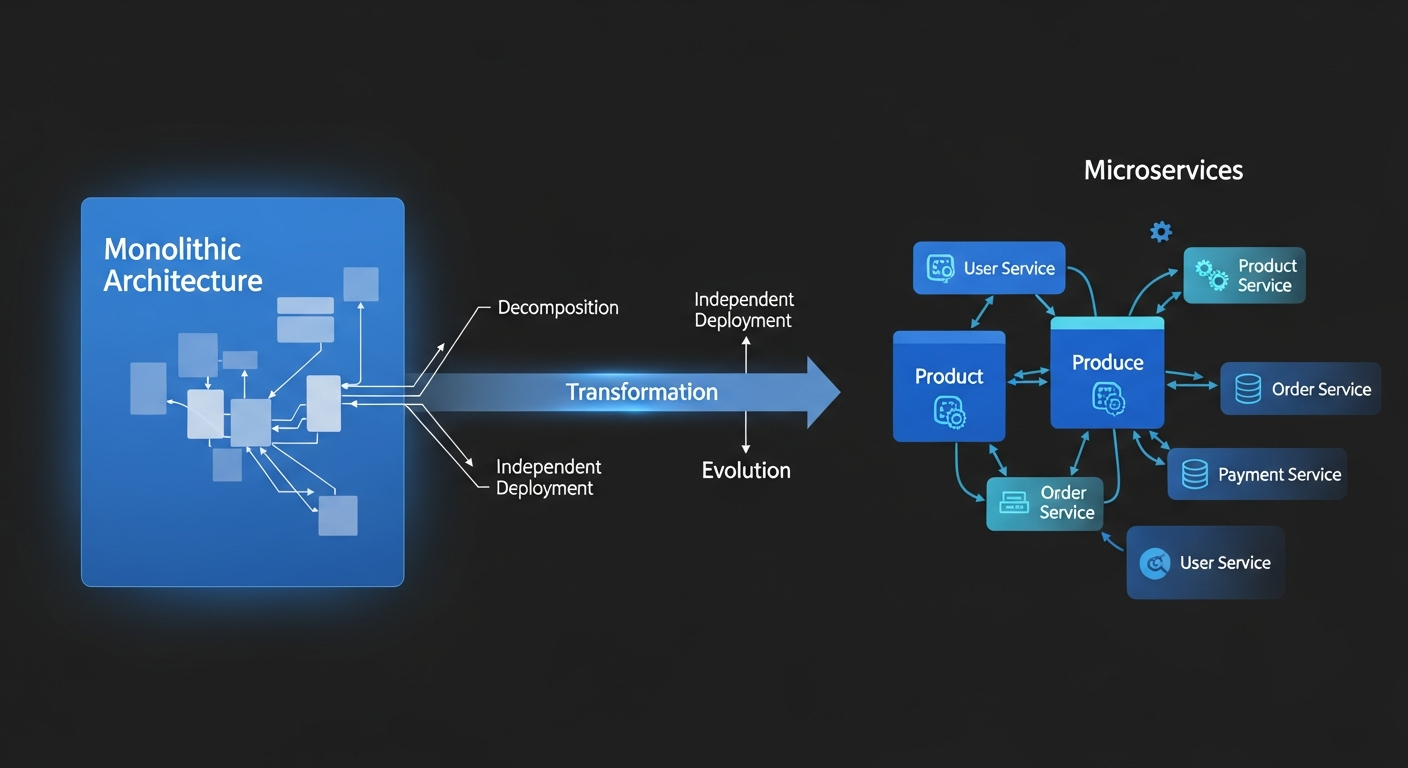
Shifting from a monolith to microservices is more than a technical upgrade. It's a strategic transformation that directly impacts agility, scale, team velocity, and long-term competitiveness. Founders often underestimate how quickly a monolithic architecture becomes a bottleneck. As feature demands rise and user volume spikes, the system slows down, deployments turn risky, and innovation stalls. Modern SaaS companies need modularity to move fast, and microservices deliver exactly that.
When the Monolith Becomes a Bottleneck
A monolith works well in the early stage because everything is simple, centralized, and easy to ship. But as your product evolves, the drawbacks become loud. Tightly coupled components make scaling expensive, development cycles drag, and even minor updates can introduce system-wide failures. When your engineering roadmap starts bending around tech limitations instead of customer needs, you've hit the ceiling.
Why Microservices Matter
Microservices flip the script by breaking your application into small, independent services that can be deployed, scaled, and iterated in parallel. This drives faster releases, cleaner ownership, and higher reliability. Teams gain flexibility. Infrastructure becomes predictable. Experimentation becomes easier. For founders, the real win is acceleration of innovation without compromising stability.
Signs You're Ready to Move
- •Increasing deployment risks that slow down shipping
- •Scaling challenges where one feature overloads the entire system
- •Team coordination issues caused by a single massive codebase
- •Frequent outages triggered by unrelated code changes
- •Roadmap delays tied to technical bottlenecks
The Migration Playbook
Transitioning to microservices isn't a one-shot migration. It's a phased journey. Start with the most painful bottlenecks. Extract high-impact services like authentication, billing, or notifications. Build strong DevOps fundamentals — CI, CD, monitoring, container orchestration. Prioritize observability so teams can troubleshoot independently and respond fast.
Microservices bring a cultural shift too. Ownership becomes distributed. Developers move faster. Product iterations scale naturally. Your architecture evolves into a living, adaptable ecosystem that supports rapid experimentation and global growth.
Moving from monolith to microservices isn't about chasing trends. It's a strategic play to future-proof your platform, unlock operational velocity, and build a product that can scale without friction. Founders who embrace this shift early position their companies for sustained, long-term innovation.